
Air Source Heat Pump: How It Works and What It Means for Your Home
Last updated:
- An air source heat pump moves heat from outside air into your home
- Air-to-water models run radiators and hot water; air-to-air models warm rooms only
- Homes swapping a combi boiler usually need space for a hot water cylinder
- Owners in England and Wales can get £7,500 off through the Boiler Upgrade Scheme
- Oil and LPG homes with no mains gas get £1,500 more until March 2027
- No VAT on the installation until 31 March 2027
- A home survey decides the size, the radiators and where the unit sits
Thinking about switching your heating to a heat pump?
Check If You Qualify- Gas Safe registered engineers
- Company No. 16100301
£7,500
Standard grant
GOV.UK
£9,000
Oil or LPG, no mains gas
GOV.UK
£12,826
Median install cost
DESNZ, Jul to Sep 2026
31 Mar 2027
0% VAT ends
HMRC
What is an air source heat pump, and what does it actually do?
An air source heat pump is a unit that collects low-grade heat from the outside air and concentrates it, so a small amount of electricity delivers a larger amount of heat indoors. It does not burn anything, which is why there is no flue, no gas supply and no fuel tank.
This is how an air source heat pump works, in a loop much like a fridge running the other way round:
- A fan draws outside air across a coil filled with refrigerant, a fluid that boils at a very low temperature.
- The refrigerant soaks up heat from the air and turns into a gas.
- An electric compressor squeezes that gas, which pushes its temperature up.
- The hot refrigerant passes its heat to the water in your heating system.
- The refrigerant cools, turns back into a liquid and goes round again.
The electricity runs the fan, the compressor and the pumps. The heat itself comes from the air, so the system gives out more energy as heat than it takes in as electricity. How much more depends on the outside temperature and on how warm the water has to be: the cooler the water it needs to make, the less electricity it uses. The Energy Saving Trust says heat pumps are more than three times more efficient than a gas or oil boiler.
That water temperature is called the flow temperature, and it is the setting that most affects running costs. A gas boiler often sends water round the radiators far hotter than a heat pump would. A well-designed heat pump system heats the home with cooler water for longer.
Air-to-water or air-to-air: which one are you looking at?
When people in the UK say "air source heat pump" they nearly always mean an air-to-water system, the type that replaces a boiler. Air-to-air is a different product with a different grant.
- Air-to-water. Heats the water in your radiators or underfloor pipes and, through a cylinder, your taps and shower. GOV.UK lists it as an "air source heat pump (sometimes called an air-to-water heat pump)", and this is the type the £7,500 grant is for.
- Air-to-air. Blows warm air into rooms through indoor units, in the way air conditioning works. It does not heat your hot water, so you would need another way to do that. It has its own £2,500 grant, explained on our air to air heat pump page.
Monobloc or split?
Air-to-water heat pumps come in two layouts, and the installer chooses the one that fits your house.
- Monobloc: everything that handles refrigerant sits in the outdoor unit, and only water pipes run into the house.
- Split: part of the system sits indoors, linked to the outdoor unit by refrigerant pipes, so the outdoor unit can be smaller.
You do not need to pick one before a survey. It is worth knowing the difference, because two quotes for "an air source heat pump" may describe quite different set-ups.
What changes when a heat pump replaces your combi boiler?
The biggest day-to-day change is hot water. A combi boiler heats water the moment you turn on a tap. A heat pump heats a store of water in a cylinder ahead of time, so homes switching from a combi usually need a cupboard or loft space for one.
Other things owners notice in the first weeks:
- Radiators run cooler. They feel warm rather than hot, and our heat pump radiators guide covers whether any need replacing.
- It runs steadily. A heat pump works best left to keep the house at an even temperature. Turning it off for hours and boosting it back up makes it work harder.
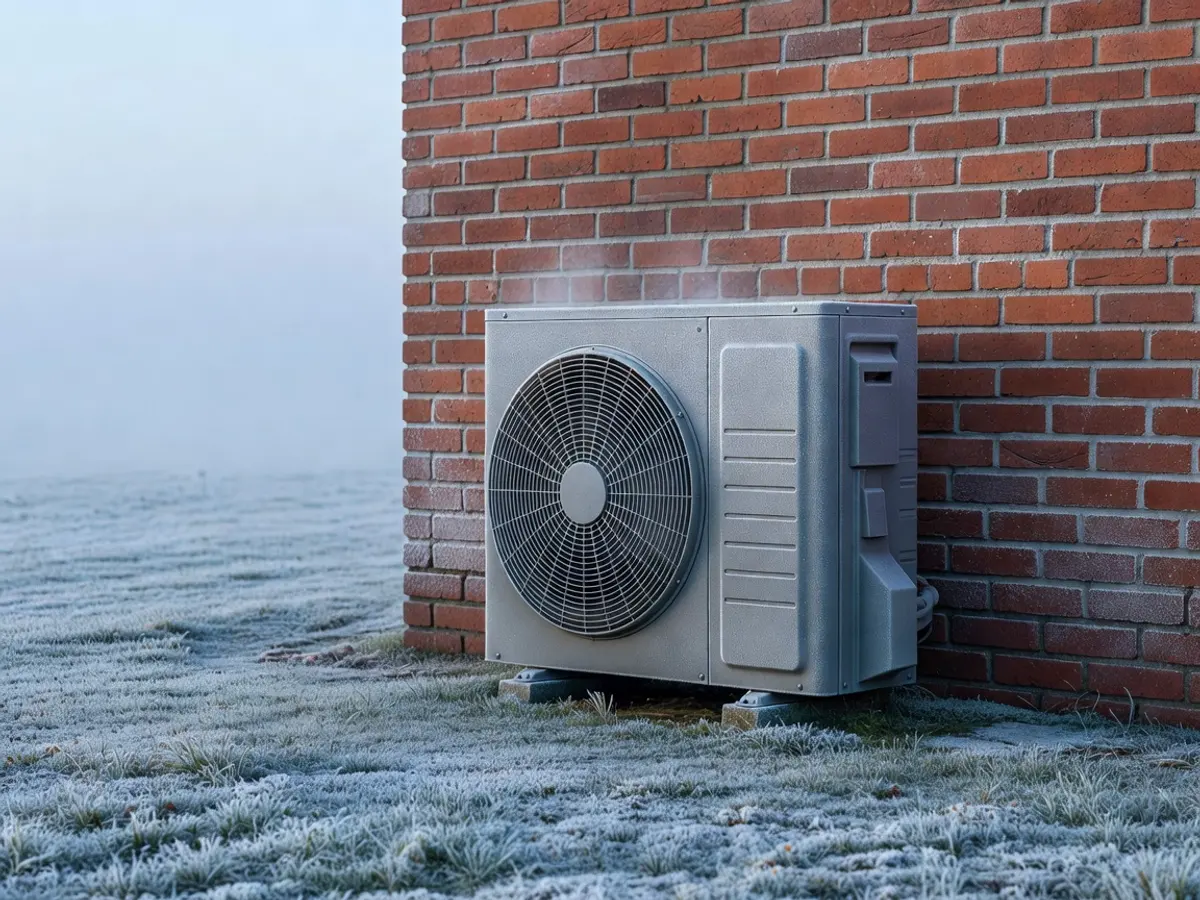
- The outdoor unit sometimes gives off a cloud of vapour. In cold, damp weather ice forms on the coil and the unit pauses to melt it. That cloud is water vapour from the defrost, not smoke.
- There is no flue and no boiler to light. If you still cook on gas, that appliance and supply carry on as before.
Will an air source heat pump suit your home?
Many houses can take an air source heat pump, but some need more work first. The answer depends on how fast the home loses heat, the size of your radiators, and whether there is space outside for the unit and inside for a cylinder.
Homes that tend to need the most thought are older houses with solid walls, homes with little or no loft insulation, and flats with nowhere suitable for an outdoor unit. That does not rule them out. It usually means insulation, larger radiators or a careful choice of where the unit sits.
Two practical points matter in most homes. The outdoor unit makes a steady hum when it runs, and where you can put it is set by planning rules; our guide to heat pump noise and planning explains both. For the money side, including when a heat pump beats gas on bills and when it does not, read are heat pumps worth it.
If your household gets a qualifying benefit, check the ECO4 scheme before you pay towards anything. ECO4 closes on 31 December 2026.
What brings the price of a heat pump down?
The Boiler Upgrade Scheme grant is taken off your installer's quote. DESNZ's Boiler Upgrade Scheme statistics for September 2026 put the median cost of an air-to-water heat pump at £12,826 for July to September 2026, a figure that includes the grant value, so what you pay is lower. Until March 2027, GOV.UK adds £1,500 for homes heated by oil or LPG with no mains gas connection, which makes £9,000. The cost breakdown is on our air source heat pump cost page, and our heat pump finance guide covers loans. Lower-income households in England may get more help through the Warm Homes: Local Grant, which runs through councils and depends on where you live. HMRC zero-rates the installation of air source heat pumps in homes until 31 March 2027; from 1 April 2027 the reduced rate of 5% returns.
Want a written price for your own home?
Who the £7,500 grant leaves out
The £7,500 grant is open to people in England and Wales, and the full rules are on our heat pump grant page. The property owner is the one who qualifies, including a landlord who rents the home out; the installer applies for the grant on their behalf. The grant does not cover:
- Social housing and most new builds.
- A hybrid system that keeps a gas boiler, covered in our hybrid heat pump guide.
- Replacing a low carbon heating system.
- Homes in Scotland, which has its own help, covered on our boiler grants in Scotland page.
From survey to switch-on
Fitting an air source heat pump follows the same order in almost every home. The survey comes first because everything else, from the size of the unit to the radiators, depends on it.
- Eligibility check. A few questions about the home, its heating and who owns it.
- Survey. The heat the home loses is worked out room by room, along with the radiators, the space for a cylinder and the best spot for the outdoor unit.
- Quote and approval. You get a written quote that shows any grant, and any approval comes before work starts.
- Installation and handover. The old boiler comes out, the new system goes in, and you are shown how to run it.
One timing rule shapes the order of work: once the grant application goes in, the heat pump has to be installed and commissioned by an MCS certified installer within 120 days, so the survey and design are finished first. What happens on each day of the work is set out in our heat pump installation guide.
What happens when you contact us?
FreeBoilerUpgrade.uk offers air source heat pumps and helps owners with the Boiler Upgrade Scheme, alongside boiler replacement, first time central heating and insulation across England and Scotland. We start with a survey of your home and explain which routes fit it.
How long it takes depends on your paperwork and the survey. Any cost to you is agreed in writing before work starts.
FAQs
What is the difference between a heat pump and an air source heat pump?
An air source heat pump is one kind of heat pump: the kind that takes its heat from the outside air. Other heat pumps collect heat from the ground or from water, which needs pipes buried in the garden or laid in a lake or borehole. GOV.UK offers £7,500 towards a ground source heat pump too, but the groundworks make it a bigger job.
How does an air source heat pump work in winter?
It keeps working, because even freezing air still holds heat the refrigerant can collect. Colder air means the unit works harder, so a good design sizes it for the coldest days you get, not an average one.
What are the downsides of air source heat pumps?
The downsides are mostly practical rather than technical, such as where the cylinder and the outdoor unit go and whether your radiators suit a lower flow temperature. A survey shows which of these apply to your home, and our guide to whether heat pumps are worth it weighs them against the cost.
Do air source heat pumps use a lot of electricity?
A heat pump uses more electricity than a gas boiler, because electricity becomes its only fuel. What you pay depends on how efficiently it runs and on your tariff, not on the amount of electricity alone, and a well-insulated home with suitable radiators needs less of it.
Check If You Qualify
Four quick steps. Tap your answers and we'll do the rest.
Sources
- GOV.UK: Boiler Upgrade Scheme
- overview
- GOV.UK: Boiler Upgrade Scheme, what you can get
- GOV.UK: Boiler Upgrade Scheme
- check if you're eligible
- HMRC: VAT on energy-saving materials and heating equipment (Notice 708/6)
- GOV.UK: Help from your energy supplier
- the Energy Company Obligation
- DESNZ: Boiler Upgrade Scheme statistics
- September 2026
- Energy Saving Trust: Air source heat pumps
- costs
- savings and benefits (all checked 12 November 2026)
About This Page
FreeBoilerUpgrade.uk is an installer run by Reliant Energy Solutions Ltd (No. 16100301), incorporated on 25 November 2024. Every boiler is fitted by a Gas Safe registered engineer. We are not part of the government or Ofgem.
- Company: Reliant Energy Solutions Ltd, company number 16100301, address 16 Suite, Turner Business Centre, Middleton, Manchester M24 1RU
- Phone: 07599 995537
- Email: info@freeboilerupgrade.uk
Ready to see what a heat pump would look like in your home?
Ready to Start Saving?
See if your household qualifies for funded ECO4 heating upgrades through the ECO4 scheme.
- 100%
- Free Service
- 60s
- Application
- ECO4
- Eligibility check