
EPC Rating D: What It Means for Your Bills, Grants and Rent
Last updated:
- A D rating means your home scored between 55 and 68
- England's median home now scores 69, so D sits just below it
- Official sources give no monthly bill by band; your certificate estimates yours
- D homes in England can be in scope of the Warm Homes: Local Grant
- A D rental is legal today; band C is planned for 1 October 2030
- The Boiler Upgrade Scheme has not needed a valid EPC since 28 April 2026
Want to know which grants a D-rated home could get?
Check If You Qualify- Gas Safe registered engineers
- Company No. 16100301
55 to 68
Band D score
ONS
69
England median score
ONS, ten years to March 2025
£1,723
Price cap, Oct to Dec 2026
Ofgem
1 Oct 2030
Band C rental standard
GOV.UK response
What does an EPC rating of D actually mean?
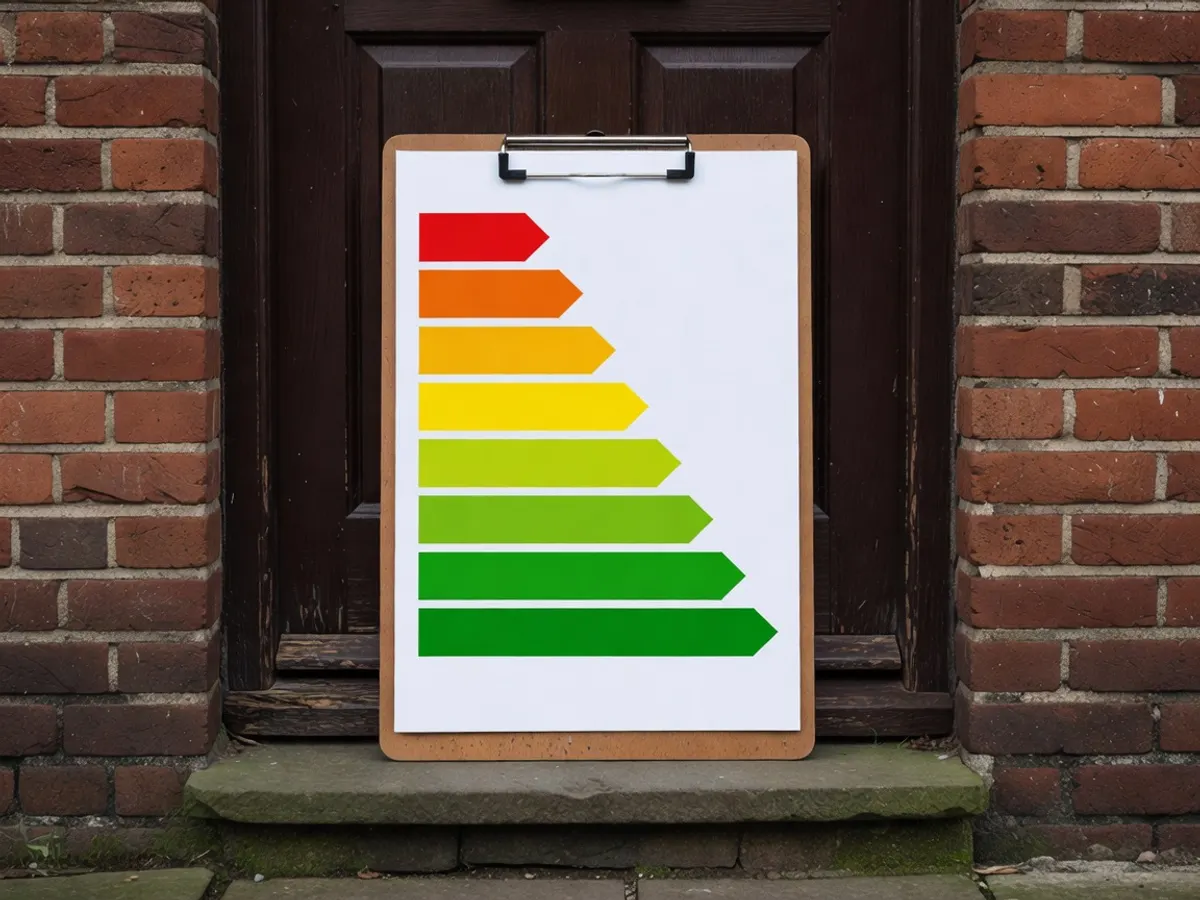
An EPC rating of D means your home's energy efficiency score falls between 55 and 68. The Office for National Statistics sets out the full scale: A is 92 plus, B is 81 to 91, C is 69 to 80, D is 55 to 68, E is 39 to 54, F is 21 to 38 and G is 1 to 20.
Many websites describe a D home as "55 to 68% efficient". That is a misreading. The score is not a percentage of anything. GOV.UK's EPC statistics explain that the rating is based on estimated fuel costs, and that in general the higher the rating, the lower the fuel bills are likely to be.
In practice, an EPC rating D means your home was modelled as costing more to heat, light and supply with hot water than a C home of the same size, and less than an E.
How does D compare with C, E, F and G?
D is one band below C and one above E, and it can still be let privately today. The table puts the bands side by side, with what each one means for a landlord in England and Wales.
| Band | Score | Private letting in England and Wales today |
|---|---|---|
| C | 69 to 80 | Can be let |
| D | 55 to 68 | Can be let. Planned to need band C by 1 October 2030 |
| E | 39 to 54 | Can be let |
| F | 21 to 38 | Cannot be let unless a valid exemption is registered |
| G | 1 to 20 | Cannot be let unless a valid exemption is registered |
Sources: ONS score bands; GOV.UK minimum energy efficiency standard landlord guidance; GOV.UK government response on privately rented homes (21 January 2026). All checked 13 November 2026.
Is an EPC rating of D good or bad?
A D is ordinary, not bad, though it now sits just below the typical home in England. ONS figures for the ten years to March 2025 give homes in England a median score of 69, which is band C, and homes in Wales a median of 68, which is band D.
The detail behind those medians shows who tends to get a D:
- Existing homes in urban areas of England: a median of 68, the top of band D.
- Existing homes in smaller rural areas of England: a median of 59, low in band D.
- Flats and maisonettes across England and Wales: a median of 74, comfortably in band C.
GOV.UK's latest EPC statistics show that in England from July to September 2026, 88% of existing homes given a certificate were rated C or D. So if your existing home is in band D, you are in very large company.
Whether a D is good or bad for you depends on the score and on your plans. A mid-60s D in a house you intend to stay in is rarely urgent. A D you plan to let after 2030, or a low-50s D where the bills already hurt, is worth acting on.
What does a D rating cost you each month?
The Ofgem, GOV.UK and ONS pages we checked give no average bill by EPC band, so any single monthly figure you see online for a D home is an estimate. The fixed ranges that some sites quote come with no source.
What you can use instead:
- Your own certificate. GOV.UK says every EPC contains information about the property's energy use and typical energy costs, plus steps to improve it. That estimate is for your home, worked out on standard assumptions about how it is used.
- The price cap as a reference point. Ofgem's energy price cap from 1 October to 31 December 2026 is £1,723 a year, based on the average unit rate and standing charge for people paying by Direct Debit in England, Scotland and Wales. Example: £1,723 divided by 12 is about £144 a month. That is a typical household figure, not a band D figure.
- What drives your bill. Ofgem points out that the cap does not limit your total bill. The more energy you use, the more you pay. Floor area, how many hours the heating runs, the fuel you heat with and your tariff all change the real number.
This is why two D homes on the same street can pay very different amounts. The rating compares homes on standard assumptions; your bill reflects how your household actually lives in it.
Which grants can a D-rated home still get?
A D home in England can be in scope of the Warm Homes: Local Grant, and the band has no bearing on the Boiler Upgrade Scheme.
Warm Homes: Local Grant
The DESNZ policy guidance limits this grant to homes in England rated D to G, a SAP score of 68 or below, so a D clears the property side and the household still has to meet an income route. A C home is ruled out whatever the household's income, which is why a household that might qualify should check before paying for small upgrades and a fresh certificate that could lift the score to 69. Homes in the Greater Manchester city region sit outside this national version, because their combined authority was handed a separate pot of money. Our guide on how to improve your EPC rating covers the income routes, the cost caps and which upgrades the grant pays for.
Heat pump grant
The Boiler Upgrade Scheme used to need a valid EPC. The Boiler Upgrade Scheme (England and Wales) (Amendment) Regulations 2026 removed that requirement from 28 April 2026, so a missing or expired certificate no longer blocks an application. The Boiler Upgrade Scheme page covers what the grant pays and who can get it.
Can you rent out a home with an EPC rating of D?
Yes. A private let in England and Wales only has to reach band E today, so a D is legal to let. GOV.UK's minimum energy efficiency standard guidance for landlords says that since 1 April 2020, homes covered by the rules cannot be let below E unless a valid exemption is registered. The maximum fine is £5,000 per property.
The bigger change is planned. The government response on improving the energy performance of privately rented homes, published on GOV.UK on 21 January 2026, sets out:
- one compliance date of 1 October 2030 for the new band C standard, for existing lets as well as new ones
- a spending cap of £10,000, with exemptions lasting 10 years
- a head start for homes already at C: a private rental graded C or above on its current rating before 1 October 2029 will count as compliant until that EPC expires or is replaced
As of 13 November 2026 the band C rules are announced, not yet law. The government says it will seek new powers by Act of Parliament and aims for the regulations to come into force in 2027.
The Warm Homes Plan adds that landlords will need to meet band C across two metrics and that low-value homes will get a lower spending cap. The government response describes the two metrics as a fabric standard first, then the landlord's choice of a heating system standard or a smart readiness standard.
For a landlord with a D, the date to plan around is therefore 1 October 2029, a year before the main deadline. Our guide to boiler grants for landlords covers the funding side.
If you rent the home rather than own it, the duties sit with your landlord, and the free boiler for tenants guide explains what you can ask for. Scotland sets its own rules for rented homes; the England and Wales standard above does not apply there.
Buying or selling a D-rated home: does the band matter?
A D rating does not stop a sale, but the certificate itself is required. GOV.UK says you must order an EPC before you market a property to sell or rent, that it is valid for 10 years, and that you can be fined if you do not get one when you need one.
For a buyer, the letter is less useful than the page behind it. The recommendations section lists the upgrades the assessor's software suggests for that home, and the cost estimates show what the model expects it to cost to run. Two D homes with the same score can need very different work.
The system is also changing. The Warm Homes Plan says the Home Energy Model is being developed to replace the current assessment method used to produce EPCs, and that the government is consulting on the band boundaries for new certificates. A D on today's certificate may not land in the same band on a future one, so treat the letter as a snapshot.
You can look up any home's current certificate with our EPC checker.
What can FreeBoilerUpgrade.uk do for a D home?
For a D-rated home, our help covers boiler replacement, first time central heating, insulation such as loft and wall insulation grants, smart heating controls, air source heat pumps with Boiler Upgrade Scheme help, and help with the Warm Homes: Local Grant form and documents.
We start with an eligibility check, then a survey, then approval and installation. How long it takes depends on your paperwork and the survey.
FAQs
Can I sell my house with EPC D?
Yes. Selling in Scotland adds one extra step, as GOV.UK says the EPC must be displayed in the property, for example in the meter cupboard or next to the boiler.
Is EPC rating D high?
No. D is the fourth of seven bands, with A, B and C above it, so it sits in the lower middle of the scale.
Is an EPC rating E good?
It is below the middle. Band E tops out at a score of 54, which is 15 points under the median of 69 for homes in England.
Can I rent a property with an EPC rating of E?
Today, yes. Looking ahead, an E sits two bands below the planned 2030 standard while a D is one band short, so an E-rated let has further to climb before October 2030.
Check If You Qualify
Four quick steps. Tap your answers and we'll do the rest.
Sources
- ONS: Energy efficiency of housing in England and Wales, 2025
- GOV.UK: Energy Performance of Buildings Certificates statistical release, July to September 2026
- GOV.UK: Energy Performance Certificates (buying and selling)
- GOV.UK: Domestic private rented property minimum energy efficiency standard
- landlord guidance
- GOV.UK: Improving the energy performance of privately rented homes
- government response
- GOV.UK: Warm Homes Plan
- DESNZ: Warm Homes: Local Grant policy guidance
- Ofgem: Energy price cap unit rates and standing charges
- Ofgem: Energy price cap and standing charges explained
- legislation.gov.uk: The Boiler Upgrade Scheme (England and Wales) (Amendment) Regulations 2026 (all checked 13 November 2026)
About This Page
FreeBoilerUpgrade.uk is an installer run by Reliant Energy Solutions Ltd (No. 16100301), incorporated on 25 November 2024. Every boiler is fitted by a Gas Safe registered engineer. We are not part of the government or Ofgem.
- Company: Reliant Energy Solutions Ltd, company number 16100301, address 16 Suite, Turner Business Centre, Middleton, Manchester M24 1RU
- Phone: 07599 995537
- Email: info@freeboilerupgrade.uk
Living in a D-rated home and ready for a survey?
Ready to Start Saving?
See if your household qualifies for funded ECO4 heating upgrades through the ECO4 scheme.
- 100%
- Free Service
- 60s
- Application
- ECO4
- Eligibility check